

Tailored vibrating and rotating systems analysis and reporting
The emergence of high-speed rotating machinery in the early twentieth century established rotor dynamics as a distinct engineering discipline. Unlike static structural analysis, rotor dynamics must account for the speed-dependent behaviour of rotating components, where natural frequencies are referred to as critical speeds and can shift significantly as machine speed changes, influenced by bearing stiffness characteristics, gyroscopic effects, and fluid-structure interaction.
Tailored vibrating and rotating systems analysis and reporting
The emergence of high-speed rotating machinery in the early twentieth century established rotor dynamics as a distinct engineering discipline. Unlike static structural analysis, rotor dynamics must account for the speed-dependent behaviour of rotating components, where natural frequencies are referred to as critical speeds and can shift significantly as machine speed changes, influenced by bearing stiffness characteristics, gyroscopic effects, and fluid-structure interaction.

Why Rotor Dynamics Analysis Matters
Operating close to a critical speed produces amplified vibration, accelerated bearing wear, and elevated fatigue risk, all of which can lead to unplanned downtime or catastrophic failure. In high-value assets such as gas turbines, industrial pumps, and long line-shafts, the consequences of inadequate rotor dynamic analysis are severe. DC White has extensive experience providing specialist analysis across these systems, identifying critical speeds and recommending design modifications to avoid or manage resonance.
Why Rotor Dynamics Analysis Matters
Operating close to a critical speed produces amplified vibration, accelerated bearing wear, and elevated fatigue risk, all of which can lead to unplanned downtime or catastrophic failure. In high-value assets such as gas turbines, industrial pumps, and long line-shafts, the consequences of inadequate rotor dynamic analysis are severe. DC White has extensive experience providing specialist analysis across these systems, identifying critical speeds and recommending design modifications to avoid or manage resonance.

Analysis Grounded in First Principles
DC White operates from academic first principles, combining MathCAD calculations with in-house and commercial rotor dynamics software. This approach allows the team to go beyond software outputs and apply engineering judgement developed over many years of working with complex vibrating systems. The result is analysis that is both technically rigorous and practically applicable.

Analysis Grounded in First Principles
DC White operates from academic first principles, combining MathCAD calculations with in-house and commercial rotor dynamics software. This approach allows the team to go beyond software outputs and apply engineering judgement developed over many years of working with complex vibrating systems. The result is analysis that is both technically rigorous and practically applicable.


Standard Rotor Dyanmics Analyses Offered
DC White provides the following core analyses as standard:
- Lateral, torsional and axial critical speed calculations
- Damped stability analysis
- Steady-state spectral force response
- Non-linear time-marched orbit analysis
Tailored Complexity to Suit the Application
For more complex rotating systems, the scope of analysis can be extended to include:
- Campbell diagrams and stability maps
- Hydrodynamic bearing modelling: horizontal and vertical axis, with CFD coefficient analysis
- Gyroscopic effects
- Stator interaction, integrated with finite element analysis (FEA)
- Axial compression and tension stiffening
- Multiple shafts and coupled axes
- Gearing and clutch dynamics
This breadth of capability means DC White can scale the analysis appropriately, from a straightforward critical speed check on a pump drive to a full dynamic model of a multi-shaft power generation system. All deliverables are provided as clear, substantiated engineering reports suitable for client review, regulatory submission, or OEM design sign-off.
Standard Rotor Dyanmics Analyses Offered
DC White provides the following core analyses as standard:
- Lateral, torsional and axial critical speed calculations
- Damped stability analysis
- Steady-state spectral force response
- Non-linear time-marched orbit analysis
Tailored Complexity to Suit the Application
For more complex rotating systems, the scope of analysis can be extended to include:
- Campbell diagrams and stability maps
- Hydrodynamic bearing modelling: horizontal and vertical axis, with CFD coefficient analysis
- Gyroscopic effects
- Stator interaction, integrated with finite element analysis (FEA)
- Axial compression and tension stiffening
- Multiple shafts and coupled axes
- Gearing and clutch dynamics
This breadth of capability means DC White can scale the analysis appropriately, from a straightforward critical speed check on a pump drive to a full dynamic model of a multi-shaft power generation system. All deliverables are provided as clear, substantiated engineering reports suitable for client review, regulatory submission, or OEM design sign-off.

Latest case study
RECOVIB Tiny in use on Tours bridge
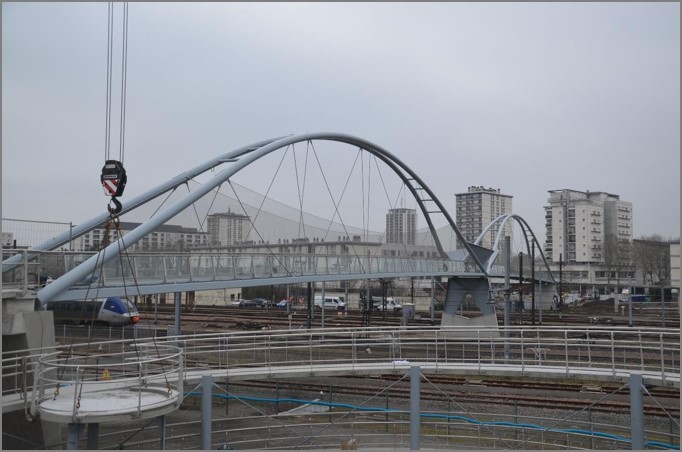
RECOVIB Tiny used on a Pedestrian Bridge in Tours, France RECOVIB Tiny used on a Pedestrian Bridge in Tours, France RECOVIB Tiny For Vibration Measurements In the city of Tours, in France, a new footbridge has been constructed. As part of commissioning, vibration measurements are carried out. By means of modal [...]
Latest case study
RECOVIB Tiny in use on Tours bridge
RECOVIB Tiny used on a Pedestrian Bridge in Tours, France RECOVIB Tiny used on a Pedestrian Bridge in Tours, France RECOVIB Tiny For Vibration Measurements In the city of Tours, in France, a new footbridge has been constructed. As part of commissioning, vibration measurements are carried out. By means of modal [...]